
The September Cruise Brief
Better bids. Dinner without the stress. A voyage that feels like you.
Make your next decision clearer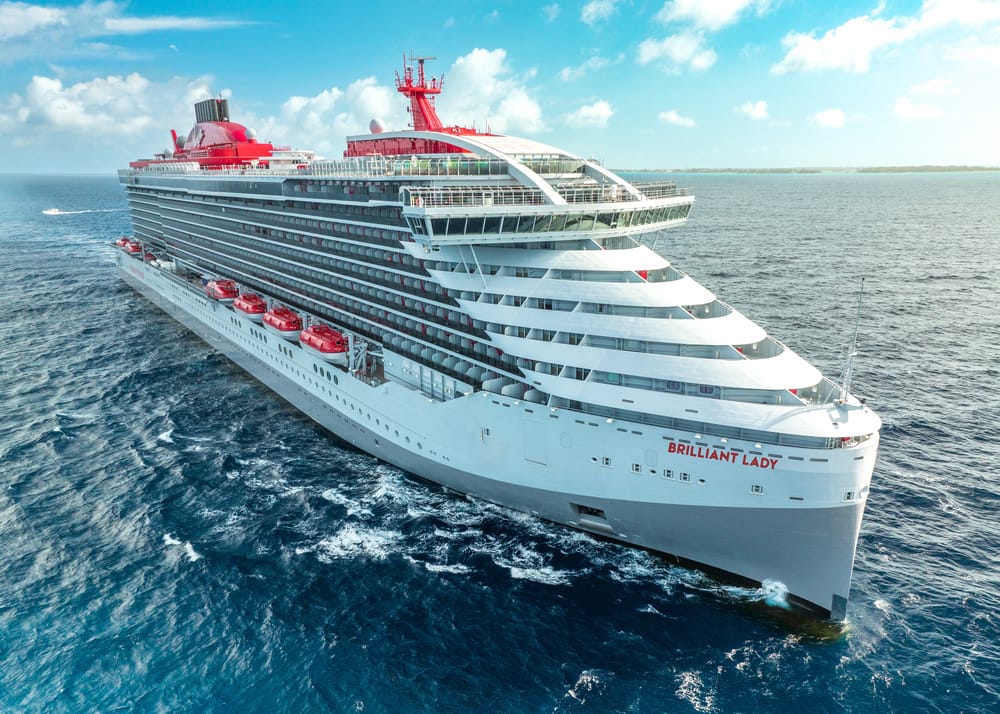
A little planning.
A lot more vacation.
A better cabin, a favorite dinner, a good fare: those things matter when they make the trip better for you. They shouldn’t become a second job.
These are the questions Sailors have been asking me. Try the planning tools, take the advice you need, and open the details when you want to go deeper.
The best upgrade starts with your limit.
An upgrade invitation can be tempting. Before you move that slider, ask yourself: What would make this upgrade worth it to me?
For us, the guide is up to $250 per cabin, per night for RockStar, or $400 for Mega RockStar, in additional upgrade cost. On a seven-night sailing, that’s $1,750 or $2,800 above what we’ve already paid.
Those are our personal spending limits. Your budget and priorities may be different, and these amounts are not predictions of a winning bid.
If your booking is eligible, you can submit an offer for an upgrade category. The amount you enter is the additional cost for the whole cabin and whole voyage, not per person or per night. An accepted offer is automatically charged; if it isn’t accepted, you keep your original cabin.
Only bid on a category you actually want. Virgin assigns the specific cabin, and accepted upgrades are generally nonrefundable under the program’s terms.
There’s no secret bid that guarantees success. A bigger offer doesn’t buy certainty. Choose an amount you would feel good about paying, then plan to enjoy the cabin you already booked.
I love this video from Gary Bembridge at Tips For Travellers, exploring why upgrade bidding isn’t simply a highest-bid-wins auction.
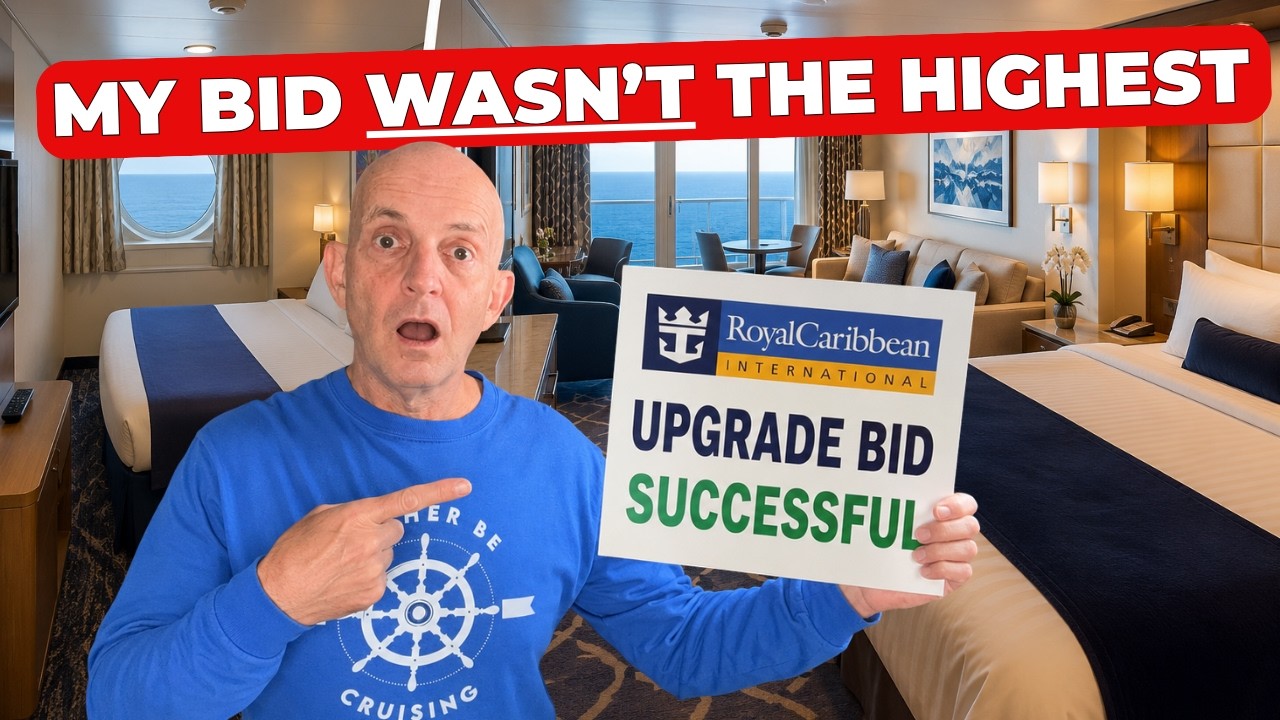
Video: Gary Bembridge · Tips For Travellers
Watch Gary: How cruise lines pick cabin upgrade winners →
Read Virgin’s upgrade terms before submitting an offer.
Ready to check your booking? Visit Virgin’s Level Upgrade page and enter your last name and Booking ID. If your booking is eligible, Virgin will take you to its bidding partner to see available upgrade options and make an offer.
What’s your comfortable limit?
Turn a nightly budget into a whole-voyage number before you bid.
7 nights × $250 per cabin
Additional upgrade cost for the entire cabin.
Starts with our personal $250 RockStar / $400 Mega RockStar guidelines. Adjust for your own budget. This is planning math, not a suggested winning bid or a guarantee. Enter a total offer in Virgin’s system, not the nightly figure.
Start with the upgrade you actually want
Write down what you’re hoping to improve: more room, a particular suite experience, or a terrace you expect to use. Then compare the category with the cabin you already have. A higher category is not automatically a better fit for your trip.
For example, if location is your main concern, a category upgrade may not solve it. If you love the cabin you picked, giving up that certainty belongs in the decision alongside the price.
Before you submit
- Compare a confirmed upgrade. Ask what it would cost to change to an available category outright. A bid is only one option.
- Check each offer separately. If you offer on several categories, be comfortable receiving any one of them at the amount attached to it.
- Agree on the total. Everyone sharing the cabin should know what you’re offering and what would make the upgrade worthwhile.
- Read the terms on your actual offer. Check the payment, change, and cancellation rules before submitting, not after an acceptance email arrives.
Virgin’s current terms allow you to change or cancel an unaccepted offer up to 72 hours before departure. Acceptance can happen earlier, so don’t treat that deadline as a promise that you can reconsider later. Keep watching the email address attached to your booking.
The question I’d ask before you add another dollar
“If this offer were accepted right now, would I be excited about the upgrade, or uncomfortable about the money?” That’s a more useful check than whether the bidding slider makes your offer look competitive.
Think of the total alongside the rest of the trip. An extra $1,750 for a seven-night RockStar upgrade is still $1,750 that could go toward another voyage, a hotel you want, or staying within your original budget. Either choice can be right. The point is to choose it deliberately.
Passing on an upgrade isn’t losing. If you booked a cabin that fits you, an unsuccessful bid leaves you with the vacation you chose in the first place.
Why someone else’s winning bid isn’t your target
A success story from another voyage doesn’t tell you what will happen on yours. Gary’s video is a useful look at why the process is more complicated than a straightforward auction. I wouldn’t turn it into a formula for beating the system.
My advice stays the same: work out what the experience is worth to you, set a limit, and avoid raising it simply because you’ve become invested in winning. If a particular suite is essential to your vacation, talk to me about booking it directly.
Save the dinner.
Enjoy the evening.
A backup reservation and a little flexibility go a long way. So does telling your server what you have planned.
Only seeing late times?
Book an option you can work with, even if it isn’t your first choice. More dining availability can open onboard. Once you’re connected to the ship’s Wi-Fi, check the app again and ask the dining team about alternatives.
Flexibility helps, but a different time or restaurant is never guaranteed. Don’t cancel a usable reservation until you have a replacement.
A practical day-one dining plan
- Before leaving home: update the Virgin app, make sure you can sign in, and keep a note of the reservations you already have.
- Once aboard: connect to the ship’s Wi-Fi and check the current dining options in the app.
- Ask with alternatives: “We’d love this restaurant around 7, but could also do 6 or 8 on another night” gives the team more to work with than one exact slot.
- Confirm the replacement: check the restaurant, date, time, and party size before releasing a reservation you can use.
A waitlist is another option to explore where offered; it is not a confirmed table. Check the current instructions in the app or with the dining team, especially if you have a show or another fixed plan afterward.
You also don’t need a long sit-down dinner every night. Leave room for a casual meal when you come back tired from port, or when you simply want an easy evening.
Read our Virtual Dining Queue guide → · Virgin’s dining FAQs
Build the evening you want.
Choose your must-try restaurants, then think about shows, port days, and whether an early or late dinner suits you. Have a second-choice time ready and make sure the reservation includes everyone who will be dining together.
A little flexibility makes planning easier than trying to lock in the same time every night.
Make a short priority list
Choose two or three dinners you’re most excited about. Next, mark the evenings when you expect a late return from port or want extra time to get ready. Put your must-do meals where they fit naturally, then keep the remaining nights more flexible.
Before reservations open for your booking, gather the party size, preferred time range, and any dietary needs you want to discuss with the team. Check the opening date that applies to your fare or suite rather than copying a date from someone else’s cruise.
Leave room between dinner and a show
A reservation time is when dinner begins. It doesn’t tell you when you’ll finish. If a show matters to you, avoid planning a rushed meal immediately before it. Once onboard entertainment bookings are available, check your evenings together and adjust where you can.
For friends in separate cabins, agree on which nights you actually want to eat together. Everyone doesn’t need the same plan every night for it to be a great group trip.
Test Kitchen. Gunbae.
Then Scarlet Night.
Keep the dinner you’re looking forward to. In my experience, Test Kitchen and Gunbae usually take 1½–2 hours and can sometimes run to three. Other reserved restaurants usually take about 1–1½ hours. Tell your server at the start that you’d like to be at the Roundabout on Deck 6 or 7 by 8 PM, and ask them to work with you on pacing.
“We’re looking forward to dinner, and we’d like to be at the Roundabout on Deck 6 or 7 by 8 PM. Can you help us pace the meal?”
An hour is the minimum to allow, not the normal length of Test Kitchen or Gunbae. Give those meals more room, plus time to get to the festivities. A 7:30 reservation is not a 30-minute dinner.
8:00 PM
Arrive at the Roundabout on Deck 6 or 7 by 8 PM. Settle in for the 9 PM kickoff. Starting the night here is a big part of the experience for me.
150 minutes until your 8 PM Roundabout arrival.
A more comfortable window for a longer meal and the walk. Tell your server your plan when you sit down.
Timing estimates from Cameron’s experience, not guarantees or available reservation times. Longer meals can run to three hours. Check your sailing’s schedule; 8 PM is Cameron’s recommended arrival time at the Roundabout, ahead of the 9 PM kickoff.
Make the most of that early arrival
My advice: be at the Roundabout on Deck 6 or 7 by 8 PM for the 9 PM kickoff. Find a spot you like and settle in. For me, being here when it all begins is an important part of the night.
Have your partner or a friend grab you a drink while you stay put. If you need to step away briefly, ask someone you’ve met onboard whether they’d mind holding your spot. Keep it friendly and considerate of the people around you.
That’s why I plan dinner around arriving at 8, even though the kickoff is at 9. I want to enjoy dinner and be in place for the beginning.
The full Test Kitchen & Gunbae timing advice
Don’t give up Test Kitchen or Gunbae on Scarlet Night just because you’re afraid dinner will run over. In my experience, these are the two restaurants that usually take 1½–2 hours and sometimes even three. Other reserved restaurants are usually about an hour to 1½ hours. Tell your server at the beginning of the meal that you want to be at the Roundabout on Deck 6 or 7 by 8 PM. That gives you time to settle in before the 9 PM kickoff. Being there for the beginning is a big part of Scarlet Night for me.
Give the team that heads-up and they can work with you on the pacing. The useful conversation happens when you sit down, not when you’re looking at your watch halfway through dinner.
“We’re looking forward to dinner, and we’d like to be at the Roundabout on Deck 6 or 7 by 8 PM. Can you help us pace the meal?”
Give dinner at least an hour, then allow time to get to the festivities. At least an hour is a planning minimum, not a promise that every meal will finish in exactly 60 minutes. If you’re seated at 7:30, don’t expect a 30-minute Test Kitchen or Gunbae meal.
For Test Kitchen or Gunbae, I’d look earlier than I would for another reserved restaurant. A 5:30 dinner gives you 2½ hours until 8 PM; 6:30 gives you only 1½ hours, including the walk. That may need a conversation about pacing, and it still isn’t a guaranteed finish. If 7:30 is all you have, look for an earlier time or move the meal to another night if being there by 8 is your priority.
My plan is to arrive at 8 PM for the 9 PM kickoff. Check your sailing’s schedule for any changes to locations or times.
A sale isn’t a saving until you’ve done the math.
Lower fare. Better deal?
Credit you would actually use changes the comparison. A lower headline price can leave you worse off.
Illustrative example, not a current offer.
Before changing anything, compare the full package: cabin category, fare type, gratuities, and any credits or benefits you would lose. A lower advertised fare can still leave you worse off.
Send me the offer that caught your eye. We can compare it with what you already have before you make a change.
Compare the booking, not the headline
Take a screenshot of the new offer and compare it against your current confirmation. The useful question is not just “Is the fare lower?” It is “Would I be better off after the whole change?”
- Same trip: ship, dates, number of Sailors, and voyage length.
- Same cabin: exact category, assigned versus unassigned cabin, and any location you chose.
- Same flexibility: fare rules, payment timing, and change or cancellation conditions.
- Same inclusions: gratuities, Bar Tab, Sailor Loot, and any offer attached to the original booking.
- Actual cost to switch: any amount lost or charged in making the change.
What to send me for a useful comparison
Send the offer link or screenshot, the cabin or fare that interests you, and what you want to improve. Is it a lower total, more flexibility, or a different cabin? That helps me compare the right things.
“Could I spend less?” and “Could I get more for roughly the same money?” are different questions. Tell me which one you’re asking. A more expensive option with extras is not automatically helpful when your goal is to reduce the bill.
A simple example
Imagine a new fare is $300 less but you would give up $400 in onboard credit you were going to use. The lower fare alone does not make that a better deal. On the other hand, credit you would never use is not worth its full face value to you.
This is an illustration, not a current offer. The comparison needs your actual booking and the live terms. Please don’t cancel a reservation while we’re checking whether the alternative is available and eligible.
The trip begins before the gangway.
Protect the time, money, and breathing room around your cruise.
Give your flights room.
When you can, arrive at least a day before sailing. For the trip home, allow for getting off the ship, reaching the airport, and clearing security. The earliest sensible flight depends on your port and itinerary.
Check the actual transfer and timing before buying the ticket. A cheap flight is less appealing when the connection is too tight.
Work backward from the ship, not forward from the cheapest flight
Before buying flights, confirm the embarkation port and the terminal or transfer information available for your sailing. “Flying to the city” and “being at the ship” are two different steps.
For the return, allow time for disembarkation, any border formalities, collecting bags, the transfer, airline check-in, and security. A flight that works for one port or one traveler may be a poor choice for another. Separate tickets and distant airports deserve extra care.
Ask what happens if the first flight is late
Look beyond the scheduled arrival. If a delay costs you a connection, is there another realistic way to reach your hotel or embarkation city before sailing? A plan with one possible route and no spare time deserves a second look.
An extra night before the cruise can feel like an added expense when you’re booking. Compare it with the stress of watching the clock on embarkation day. For me, the goal is to start the voyage feeling ready, not relieved that we barely made it.
Keep the essentials with you
Travel documents, medications, chargers, and a change of clothes belong in your carry-on. Keep hotel and transfer confirmations available offline. If checked luggage takes an extra day to catch up, you’ll have the things you need most.
When sending me flight options to review, include both airports, the dates, arrival and departure times, and whether you’re checking bags. That makes the timing conversation much more useful than a fare screenshot alone.
Budget beyond the fare.
Check airfare before committing to a sailing, then add hotels, transfers, gratuities, and the extras you’ll actually use. Compare the whole trip across a couple of dates.
The right cabin on the right sailing should leave room in the budget to enjoy getting there, too.
Build one whole-trip number
Put these lines into a simple note or spreadsheet before deciding:
- The cruise, including the fare option and gratuities you intend to pay.
- Flights, baggage, and any seat fees that matter to you.
- Pre- or post-cruise hotels and airport/port transfers.
- Port activities, meals ashore, and local transportation.
- Drinks and onboard extras you expect to use.
- Travel protection and a buffer for unplanned costs.
Compare two or three complete trip options. A cheaper sailing with expensive flights or an extra hotel night may cost more overall. A slightly higher cruise fare might leave you with easier travel days and fewer moving parts.
Try this before adding another package
Make two columns: “I know I’ll use this” and “It sounds nice.” Put each extra in one of them, with its actual cost. Start your budget with the first column.
That does not mean you should never splurge. It means the splurge should be something you want. If an upgrade, drinks credit, or an activity is only appealing because it looks like a deal, give yourself a little time before buying it.
Spend on the things you’ll notice
Ask yourself where you actually spend time on vacation. If you use the terrace every day, that may be a priority. If a longer trip matters more than a suite, protect that part of the budget. There is no prize for buying every extra.
Use the Bar Tab Calculator → as a planning aid, then check the current offers and what your fare already includes.
Worth a read before you sail.
Three new September guides, chosen to help you plan a cruise that fits.

Virgin Voyages Dining by Ship: Four Reasons to Come Hungry
Explore the food personalities across all four ships and find a reason to try your next one.

Virgin Voyages Without Alcohol: Drinks, Evenings, and a Cruise That Fits You
A thoughtful look at drinks, evenings, and whether the atmosphere suits the way you like to travel.

Your First Virgin Voyages Cruise After Another Cruise Line: What Works Differently
Bring your cruising experience, then get familiar with the Virgin details that work differently.
Article images are editorial illustrations, not photographs of specific onboard venues or dishes.
That’s the point.
Back from the ship
I’m back from Northern Europe on Valiant Lady, and the trip gave me plenty to talk about. If Europe is on your list, I unpack the experience in this month’s podcast, Europe Is Different. That’s the Point.
Come sail with me in March
Join me aboard Brilliant Lady, March 4–8, 2027: four nights round trip from Miami, with Key West and The Beach Club at Bimini.
Come solo, as a couple, or with friends. It’s a chance to try Virgin with a familiar face onboard. I’ll help you check current cabin options and pricing.
Five things.
Ten minutes. More peace of mind.
Put your confirmation, flight plan, and dining reservations next to each other. Look for the gaps between them.
0 of 5 reviewed
Your selections reset when you leave this page.
What’s on your mind before you sail?
An upgrade offer, a dining plan, or a fare that looks tempting? Tell me what you’re weighing up.
Let’s talk about your voyageSmooth seas,
Cameron